How to put Korea back on track for surpluses
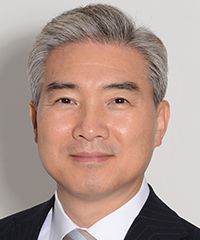
By Hong Kwang-hee
While initial hopes for a global economic recovery in the Year of the Black Tiger fizzled out, business practices have changed completely, on an unpredicted magnitude.
The world stepped into unprecedented territory, as it is experiencing a combination of risks involving the Russian invasion of Ukraine, the COVID-19 pandemic and soaring prices across the board.
The complexity of crises is causing a chain effect: collapse of global supply chains, price hikes in major commodities, fiscal policy against inflation, rising interest rates and the unprecedented pace of depreciation in the value of the Korean currency.
At the same time, the aging society, trends of de-globalization, de-carbonized energy policy and a liquidity crunch in the domestic capital market are overshadowing the Korean economy.
The Korean economy has been propelled mainly by international trading. In 2021, Korea posted $644 billion in exports and $615 billion in imports, resulting in a trade surplus of $29 billion.
Its exports ranked the sixth-largest in the world, according to the World Trade Organization (WTO). If considering the Netherlands as a specialized merchant trading nation, Korea is presumed to claim the fifth place. Korea chases right behind No. 5 Japan and far ahead of No. 7 Italy.
In terms of import volume, Korea's rank jumped up to the eighth-largest this year from ninth in 2021. Imports recorded $550 billion in the third quarter of 2022, up 25 percent from a year earlier.
Moreover, Korea's yearly trading volume exceeded $1 trillion on Sept. 14, the earliest ever. Its total trading reached $1.3 trillion at the end of November and is expected to hit an all-time high of $1.4 trillion by the end of 2022.
Although Korea showed surpluses in trade balance from 2008 to 2021, it posted a cumulative deficit of $42.5 billion in November 2022.
The pace of exports has kept decreasing, while imports have grown at a faster clip. This illustrates that the world market imported less Korean products than ever and caused Korea's export volume to go down, leaving the account in deficit.
A fall in demand for Korean goods reflects a prolonged global economic slowdown amid weakening global consumption and corporate demand.
In addition, price hikes in global natural commodities caused additional expenses for Korea's imports. It is notable that Korea's deficit portion appeared in heavy imports from the Middle East for petroleum-related products.
The current trade shortfall of $42.5 billion marks a new record and takes up 3.27 percent of total trading volume. In comparison, the $20.6-billion deficit in 1996 accounted for 7.4 percent of total trading.
International trading is no longer easy business for Korea as there are many unfavorable conditions in most and various sectors.
It is time to approach with a new action plan by designing contingency measures not only for boosting exports but also for optimizing imports “for Korea buying in low costs and selling in high prices.”
The primary agenda is to execute an in-depth study on global suppliers' product profiles and build a supplier's platform. In the long run, this will answer global chain problems by extending networks and originating competitive suppliers.
It is necessary to learn and evaluate global suppliers' priorities on price and quality terms. This information will give Korea's imports a cost benefit and tech advantage. Then we can assure Korea's trade will soon stand back on track for surpluses.
Dr. Hong Kwang-hee is chairman & CEO of New Korea Trading Corp. and former chairman of the Korea Importers Association.