Mid-sized brokerage firms undergo restructuring to secure liquidity
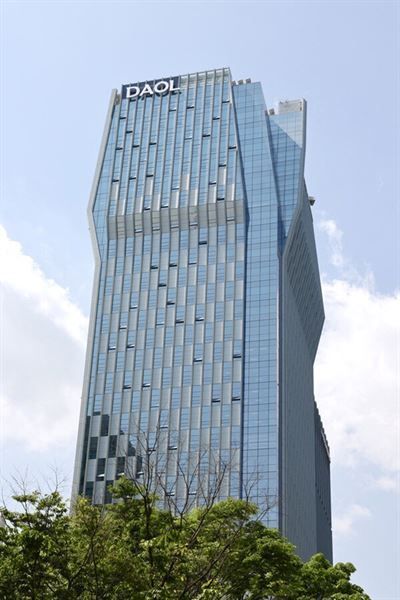
The headquarters of Daol Investment & Securities on Yeouido in Seoul / Courtesy of Daol Investment
By Anna J. Park
Daol Investment & Securities is receiving applications from its full-time employees for voluntary retirement until next Monday. It is the first time in nearly 10 years that the brokerage firm has conducted a voluntary resignation program since 2013. Those who with over five years of experience will be granted about 13 to 18 months' worth of salary, once their resignations commence ― by the end of this year.
The move is seen as the firm's attempt to carry out restructuring to cut costs so as to secure liquidity. Daol Investment, in particular, is known to have a considerable amount of risk exposure to real estate project financing compared to its capital size.
Besides the voluntary retirement program, key executives of the firm also tendered their resignations earlier this month. On a similar note to mitigate any liquidity crisis, the company has also recently begun the process of selling its Thai affiliate, Daol Thailand PCL, for about 100 billion won ($75 million), while also attracting the necessary capital by selling commercial paper.
“The company is carrying out a corporate and organizational restructuring from a medium and long-term perspective, as the real estate market is not likely to be normalized in a short period of time due to rising interest rates,” an official from Daol Investment & Securities said, adding that the voluntary retirement application's target size is not predetermined.
Some mid-sized brokerage companies, including Daol, have expanded their investment banking (IB) departments, becoming involved in various investments in real estate project financing over the past few years. Now, however, they have begun taking the lead in conducting layoffs and corporate restructuring.
For instance, eBest Investment & Securities is mulling over the possibility of reducing the number of employees in its IB departments, and CAPE Investment & Securities decided to discontinue its research and corporate sales business teams last month. Most of the 30 employees included in the teams are excluded from the renewal of contracts for next year.
Market insiders say contract-based employees or research teams that do not generate direct profits for a company, are facing the most imminent threat of being laid off. The real estate project financing departments of Securities companies, which have been hit hard by soaring global interest rates, are also considered to be the first to be slashed during corporate restructuring.
As most contract workers at local brokerage companies have an annual contract that usually ends at the end of a year, massive layoffs through not renewing current contracts are expected to happen in the local brokerage companies.
Bookook Securities has the highest ratio of contract-based workers at 68 percent, followed by Meritz Securities at 63 percent, Daol Investment at 62 percent, Hanyang Securities at 53 percent and eBest Investment at 53 percent.