Obama overrules ITC's Apple ban
By Isaac Kim
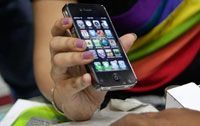
In this May 27, 2011, file photo, a salesperson at a mobile phone shop displays an Apple iPhone 4 to a customer in New Delhi. U.S. President Obama's trade representative on Saturday, Aug. 3, 2013, vetoed a ban on imports of the iPhone 4 and some variations of the iPad 2, reversing a ruling in favor of rival South Korean electronics company Samsung.
President Barack Obama’s administration overturned the International Trade Commission (ITC)’s decision to ban importing or selling certain Apple products in the U.S. Saturday (KST).
Ambassador Michael Froman, the U.S trade representative, wrote a letter to ITC’s chairman, Irving Williamson, saying, “After extensive consultations with the agencies of the Trade Policy Staff Committee (TPSC) and the Trade Policy Review Group (TPRG), as well as other interested agencies and persons, I have decided to disapprove the ITC’s determination to issue an exclusion order.”
“This decision is based on my review of the effect on competitive conditions in the U.S. economy and the effect on U.S. consumers,” he added.
“This policy decision is not a criticism of the ITC’s decision,” he emphasized. “On the contrary, the patent owner may continue to pursue its rights through the courts.”
The ban would have affected Apple products such as the iPhone 4 and iPad 2.
The ITC had pronounced Apple infringed on Samsung patents which lead to the decision to ban certain Apple products in early June.
The Obama Administration had 60 days to overturn the ITC’s decision, but since 1987, the ITC’s rulings had never been overturned.
President Obama’s repeal on the ban is widely believed to have an impact on both the political and industrial sectors.
Some analyzed the decision to overturn the ITC’s ruling as influenced by blatant lobbying from certain political and financial interest groups.