France in Korea: 1886 to 2016
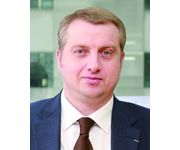
By David-Pierre Jalicon
Did you know that there were near to 200 French companies operating in Korea? And that they employ 28,000 people and generate 10 trillion won of gross income? You would be amazed at how vibrant and diverse this French business community is, from multinational groups like Airbus, Total, Thales or Veolia, to SMEs and start-ups like Asiance, Direct Optic and Evasion IT Concept; from luxury brands to architecture and aeronautics. Did you also know that over 5,000 French companies export to South Korea and that bilateral commercial exchange between France and Korea was 9 billion euros in 2014? This is hardly a new development and is the result of a long history ― 130 years counting from the first diplomatic treaty signed in 1886!
In terms of business, actual exchanges started in the 1960s, and since then France’s business presence in Korea kept growing, going along and evolving with the different stages of Korean’s economic development. They can be summarized in four phases.
Phase 1: establishment of French big groups
Between 1953 and 1970, Korean GDP was multiplied by 5 and the GDP per inhabitant increased from 67 to 253 dollars per year. As the government focused on developing its industry, France, through its major groups, started collaborating to build industrial construction and infrastructure, such as power plants, road and rail transports, and ship maintenance.
In 1964, Air France was the first to open an office in Korea, followed in the 70s by major companies such as Pechiney (1972), Airbus Industries, Alstom CGE, Degremont, Indosuez (1974), Rhone Poulenc (1975) and BNP (1976) among others. From 1970 to 1979, bilateral exchanges increased from $54 million to $607 million. In 1986, these pioneers gathered to create the French Korean Chamber of Commerce (at first called the French Business Association in Korea) 30 years ago with 30 members.
Phase 2: wider French presence
The year 1988 was a new step for Korea. The Olympic Games held in Seoul drew the world’s attention to the country, revealing a modern, dynamic and fascinating Korea. As the country was starting a process of liberalizing and opening its economy, more and more French companies set foot in Korea, operating in a wider range of sectors: agro-food, car manufacturing, insurance and consumption goods. The contract signed in 1993 for the high-speed train (TGV) between Seoul-Busan was the highlight of that decade: “We entered a new era for the French-Korean relationships. The future is bright,” declared French President François Mitterrand during his state visit. This first presidential visit largely contributed to strengthen France’s image in Korea and initiated a closer collaboration full of promises for the French Korean community. In 1996, the French Korean Chamber numbered 123 companies and opened its membership to non-French companies, with the purpose of encouraging synergy between France and Korea.
Phase 3: M&A opportunities
The IMF crisis in 1997-1998 was a turning point for French-Korean relationships. As Korea was opening to globalization and becoming a consumer society, France followed the country’s evolution and actively participated to shape the future Korea, through major M&As and joint-ventures. Indeed, French companies, which used to work in Korea mostly through big contracts, started investing in the country ― from 1997 to 2001, France was among the major foreign country investors (currently 7th). From the 2000’s, French investments keep increasingly standing out for their qualitative and long-term oriented basis. Successful major partnerships, such as Lafarge Halla Cement and Renault Samsung Motors founded in 2000 or Total and Samsung General Chemicals’ joint-venture in 2000, illustrate the opportunities lying in French and Korean collaboration.
Phase 4: era of partnerships and SMEs
The free-trade agreement signed in 2011 was a major tool to boost the commercial exchanges, which could double in the next 20 years!
Today, the chamber, celebrating its 30th anniversary, has over 350 French and Korean members, and is dedicated to deepen the synergy between France and Korea’s expertise. This new stage in the French-Korean relationship sees the arrival and creation of numerous French SMEs, and France is now providing an always wider range of services in its areas of excellence: aeronautics, energy, agro food, fashion and luxury goods, but also tourism, marketing, IT and architecture. The opening in March of the French Tech Hub Seoul, an ecosystem aiming at introducing French start-ups to the Korean market, will be a great vector to create a stimulating and inspiring environment to develop successful partnerships.
Through this quick historical summary, France has been able to adapt itself and to evolve and be an accurate partner for Korea through time. As Korea and France are both looking towards innovation and the creative economy to build the future, I have no doubt that both countries will stay side by side, through prosperous and extensive collaboration.
David-Pierre Jalicon is the chairman of the
French-Korean Chamber of Commerce and
Industry (FKCCI).