World without America
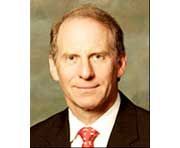
By Richard N. Haass
NEW YORK ― Let me posit a radical idea: The most critical threat facing the United States now and for the foreseeable future is not a rising China, a reckless North Korea, a nuclear Iran, modern terrorism, or climate change. Although all of these constitute potential or actual threats, the biggest challenges facing the U.S. are its burgeoning debt, crumbling infrastructure, second-rate primary and secondary schools, outdated immigration system, and slow economic growth ― in short, the domestic foundations of American power.
Readers in other countries may be tempted to react to this judgment with a dose of schadenfreude, finding more than a little satisfaction in America’s difficulties. Such a response should not be surprising. The U.S. and those representing it have been guilty of hubris (the U.S. may often be the indispensable nation, but it would be better if others pointed this out), and examples of inconsistency between America’s practices and its principles understandably provoke charges of hypocrisy. When America does not adhere to the principles that it preaches to others, it breeds resentment.
But, like most temptations, the urge to gloat at America’s imperfections and struggles ought to be resisted. People around the globe should be careful what they wish for. America’s failure to deal with its internal challenges would come at a steep price. Indeed, the rest of the world’s stake in American success is nearly as large as that of the U.S. itself.
Part of the reason is economic. The U.S. economy still accounts for about one-quarter of global output. If U.S. growth accelerates, America’s capacity to consume other countries’ goods and services will increase, thereby boosting growth around the world. At a time when Europe is drifting and Asia is slowing, only the U.S. (or, more broadly, North America) has the potential to drive global economic recovery.
The U.S. remains a unique source of innovation. Most of the world’s citizens communicate with mobile devices based on technology developed in Silicon Valley; likewise, the Internet was made in America. More recently, new technologies developed in the U.S. greatly increase the ability to extract oil and natural gas from underground formations. This technology is now making its way around the globe, allowing other societies to increase their energy production and decrease both their reliance on costly imports and their carbon emissions.
The U.S. is also an invaluable source of ideas. Its world-class universities educate a significant percentage of future world leaders. More fundamentally, the U.S. has long been a leading example of what market economies and democratic politics can accomplish. People and governments around the world are far more likely to become more open if the American model is perceived to be succeeding.
Finally, the world faces many serious challenges, ranging from the need to halt the spread of weapons of mass destruction, fight climate change, and maintain a functioning world economic order that promotes trade and investment to regulating practices in cyberspace, improving global health, and preventing armed conflicts. These problems will not simply go away or sort themselves out.
While Adam Smith’s “invisible hand” may ensure the success of free markets, it is powerless in the world of geopolitics. Order requires the visible hand of leadership to formulate and realize global responses to global challenges.
Don’t get me wrong: None of this is meant to suggest that the U.S. can deal effectively with the world’s problems on its own. Unilateralism rarely works. It is not just that the U.S. lacks the means; the very nature of contemporary global problems suggests that only collective responses stand a good chance of succeeding.
But multilateralism is much easier to advocate than to design and implement. Right now there is only one candidate for this role: the U.S. No other country has the necessary combination of capability and outlook.
This brings me back to the argument that the U.S. must put its house in order ― economically, physically, socially, and politically ― if it is to have the resources needed to promote order in the world. Everyone should hope that it does: The alternative to a world led by the U.S. is not a world led by China, Europe, Russia, Japan, India, or any other country, but rather a world that is not led at all. Such a world would almost certainly be characterized by chronic crisis and conflict. That would be bad not just for Americans, but for the vast majority of the planet’s inhabitants.
Richard N. Haass is president of the Council on Foreign Relations and the author of "Foreign Policy Begins at Home: The Case for Putting America’s House in Order." For more stories, visit Project Syndicate (www.project-syndicate.org).