Korea leads in smart grids
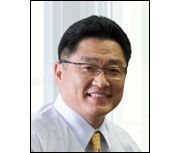
By Koo Ja-kyun
Spring is just around the corner.
Although it is still cold in the early morning, it feels like spring in the afternoon with the generous sunshine.
This winter has been unusually cold, making it seem longer.
In recent years, however, the weather trend is that winters are increasingly cold and summers are increasingly hot, whereas springs and autumns seem to get shorter.
These trends will likely persist due to global warming caused by the excessive use of coal. “Four distinctive seasons,” as the song goes and which Korea boasts, may no longer be enjoyed.
Due to such increasing weather extremities, Korea suffers from an electric power supply crisis in summer and winter each year.
With power consumption rapidly increasing, summer and winter blackout drills in preparation for the crisis of power outages are conducted nowadays, targeting homes, shops, offices and businesses.
The government last summer and this winter ran a national power generation construction week to limit the heating temperature of 65,000 high energy consuming buildings, those with contracted power of up to 3,000 kilowatts, to less than 20 degrees Celsius and to publicize intensively the seriousness of wintertime power supply situations in an effort to respond positively to the crisis of power supply.
Last November, the government announced the demand and supply management and adoption of a selective maximum peak rate system as a power demand and supply measure, implying its adoption of the maximum peak rate system, which is being implemented in countries such as the United States and France.
Under this system, however, consumers of electric power will voluntarily or obligatorily reduce power consumption in response to the power peak situation.
From a short-term perspective, it will create huge effects but cannot be a fundamental solution.
In this regard, Korea’s power demand and supply structure should first be examined. Over 30 percent of the country’s power is consumed in the Seoul area.
Note, however, that the power generation facility capacity in and around the Seoul area is less than 10 percent of the country’s total.
The remaining power is supplied from coastal-area power plants via super-voltage transmission lines.
The country’s transmission and distribution loss ratio is 4 percent, which is considerably high compared with that of other countries worldwide.
If 70 million kilowatts are consumed during peak time, 4 percent or 2.8 million kilowatts will be lost during the transmission of power.
This loss is tantamount to the power generation of three nuclear power plants.
A core smart grid technology is intended to use decentralization systems through which the supply and consumption of power between short distances rather than between long ones are enabled.
This can reduce power loss considerably. Thus, Korea has already installed many decentralized power sources.
They include cogeneration power plants constructed in large cities and downtown areas ― 5.2 million kilowatts ― small cogeneration systems installed in apartment complexes and businesses ― 3.6 million kilowatts ― and emergency power generators installed in buildings ― 19 million kilowatts.
Nonetheless, emergency power generators, which are diesel generators powered by fuel, could not be operated due to high costs during the usual time.
They can only be used during emergency situations. To address this problem, it is essential to introduce energy storage systems (ESS). Specifically, ESS enable the storage of power during the hours when extra power is available and discharging of power during peak time.
The Park Geun-hye government has already vowed to adopt the system. Thus, the relevant industries will likely develop faster.
To reduce power loss during transmission, the power supply system should be changed to adopt smart grids based on power decentralization.
It would be difficult to switch to such systems from a short-term perspective but the government should come up with a stable system designed to ensure the profitability of decentralized power operation and provide support to the relevant private sectors.
Industries should also develop technologies and products designed to lower operating and fuel costs.
If smart grids are built, the power supply crisis that occurs each year will be overcome and global warming will be prevented, allowing Korea to preserve its four distinctive seasons as a source of pride.
Koo Ja-kyun is CEO of LSIS.