Kudos to Korean parents
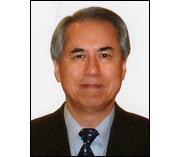
By Lee Hyon-soo
Korea was one of the poorest countries in the early 1960s. Today, Korea boasts the world’s 15th largest economy with per capita annual income exceeding $20,000. Indeed Korea has come a long way and is now the envy of less-developed countries.
Korea’s economic growth was so dramatic it was called “the miracle on the Han.” When Korea embarked on economic development in the early 1960s, it had to start from scratch because it was not endowed with natural resources nor did it have a capital base to speak of. However, Korea had something other poor countries did not have at the time: (a) a visionary, strong-willed political leader who came up with an ambitious development plan and (b) a large pool of well-educated workers that could be mobilized to execute his plan.
Behind well-educated workers were their parents. They gave priority to the education of their children, although they suffered many hardships in a poverty-stricken country. If a large number of good workers had not been available, Korea’s economic development plan would not have borne fruit. Therefore, the credit for Korea’s remarkable economic growth goes in a large measure to the parents who educated their children, who in turn provided the requisite manpower.
The Korean tradition of educational zeal has persisted to date. Actually, it grew more acute as the years passed. Korean parents who feel that Korea’s public education system leaves much to be desired invariably send their children to private institutes of education after school, which entails an unbearable financial burden for less affluent parents.
There are more aggressive parents who take extraordinary measures for the sake of their children. They take their children abroad to give them first-rate education that is not available in Korea. They may be divided into two disparate groups.
Included in the first group are the parents who have emigrated to foreign countries such as the United States, Canada and Australia with their children. Due to language and other barriers they struggle to make ends meet in the foreign countries where they have settled. However, they make an all-out effort to educate their children. Their single-minded devotion has started to pay off as most of their grown children excel in the professions they have chosen.
The second group comprises the parents who give up their normal married lives by living separately for the education of their children. Mothers take care of their children who go to school in foreign countries, while fathers stay home in Korea to make money to support them. They get together once or twice a year. Such an unnatural lifestyle entails serious hardships on the part of the parents concerned.
Only Korean parents would endure such hardships for the sake of their children. The offshoot of their self-sacrifice is that their children who have been educated offshore will have an advantage in seeking employment in the international arena. And those who return home will be able to play an important role in internationalizing Korea.
In a nutshell, it seems that there are no parents like Korean parents as far as children’s education is concerned. They really deserve commendation.
The writer is a freelance columnist based in Toronto, Canada. His email address is tomhslee@hanmail.net.