Guide to choosing new digital camera
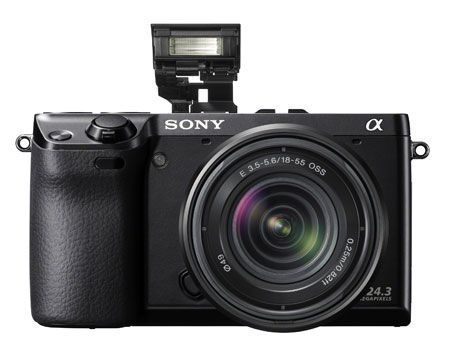
Sony's flagship mirrorless camera NEX-7 / Courtesy of Sony Korea
By Yoon Sung-won
Hur Eun-young is a 24-year-old Seoulite who recently got a job. To get rid of work stress, Hur went on a picnic with friends on the bank of the Han River, where numerous spring flowers were in bloom. To capture the precious moments, Hur took dozens of photos with her smartphone and posted them on her social networking service page.
But when checking other postings, Hur found her photos were of much worse quality than her friends’ taken with high-performance cameras, and some of hers weren’t even in focus. Frustrated, she decided to buy a new camera. But she was at a loss, trying to make a decision from a myriad of camera choices.
You might have experienced a similar situation, if you are not familiar with cameras. For those who have no idea what to consider in choosing a new camera and for those who got stressed out by complicated camera jargon, here are some tips.
Understanding what is different
Korea’s digital camera market for ordinary users is divided into three categories: digital single lens reflex (DSLR), compact, and mirrorless cameras. The first step to choosing the right one for you is to understand the differences.
DSLR cameras work similarly to ordinary film cameras. That is because they inherited most of their structure from earlier conventional cameras. For this reason, they are by and large bigger in size and heavier in weight than the other two types. However, DSLR cameras have greater control options over detailed aspects of taking photographs, providing photographers with a better environment to produce artistic and commercial images.
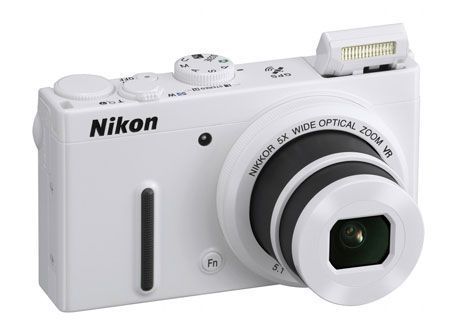
Nikon's latest compact camera P330, sequel to one of the bestselling models P310 / Courtesy of Nikon Imaging Korea
Compact cameras, on the contrary, substitute most of the complicated optical parts with electronic chips. Thanks to the substitution, compact cameras are much lighter and slimmer, and provide the best portability. Accordingly, they boast powerful automatic modes in which artificial intelligence sets up most of the complicated details quickly for you.
Mirrorless cameras combine the advantages of compacts and DSLRs. Like compact cameras, they are much lighter and slimmer than DSLR cameras. At the same time, they adopted an interchangeable lens system, allowing users to select from lenses exclusively designed for mirrorless cameras. Users can also buy an additional accessory called a “lens mount converter,” which allows mirrorless cameras to use high-performance lenses made for DSLR cameras.
Knowing what you want
You should also keep in mind three important factors ― taste, purpose and budget ― before looking at product catalogs at online camera shopping malls or browsing display stands at electronics stores.
“Taste” is about your preference in design and color choices. Compact cameras and mirrorless cameras tend to offer more color choices while most DSLR cameras are black. Some compact and mirrorless cameras adopt retro-style designs that are similar to old film cameras.
“Budget” may be the most important factor here. Deciding how much you want to invest in a new camera in advance is recommended, because the price category is too diverse by class and brand. For example, Sony mirrorless camera prices, lenses excluded, range from 300,000 won ($265) to more than 1 million won, according to the price list posted on local online electronics shopping mall “Danawa” on Wednesday. Similarly, lens prices differ by brand and performance. Prices of Canon DSLR camera lenses start at 70,000 won, while high-performance lenses cost more than 2 million won.
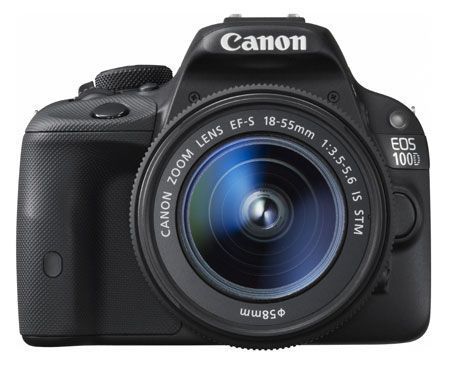
Canon's latest entry-level DSLR camera 100D / Courtesy of Canon Korea Consumer Imaging
“Purpose” is about for what you will use your new camera. If you want to carry your camera wherever you go, you are likely to choose a camera that is lighter and slimmer, and thus easier to carry.
If you want to maximize the fun of photography, learning and practicing photographic skills more seriously, you’re better to choose an interchangeable lens camera, like a DSLR. Various lens choices already on the market is another reason to choose a DSLR.
If you don’t want to lose either portability or performance, a mirrorless camera is a good compromise. If you hesitate to choose a DSLR camera for some reason, be it size, weight, or lack of color variety, but still want to taste the pleasure of photography, a mirrorless camera will satisfy you with its all-roundedness.
Also check whether the camera you are considering has handy features that help you take photos more easily. A movable LCD screen provides more convenience in taking photos of objects that are barely within your reach, for example, yourself. Some models provide wireless network connections that allow you to send photos to others or to upload them to social networking sites directly from the device.
Digital cameras have advanced both in technology and design in recent years, giving customers a range of choices. But be cautious, because you are likely to lose interest if your newly bought camera does not suit your taste. Also, using a high-performance camera does not necessarily mean you can produce high-quality photos. Remember the best camera for you is the one that satisfies your taste, purpose and budget.